Filmmaking Duo Miriam and Mitchell Arens Talk Tech, Ethics, Grief, and Being Human in HEARTWORM
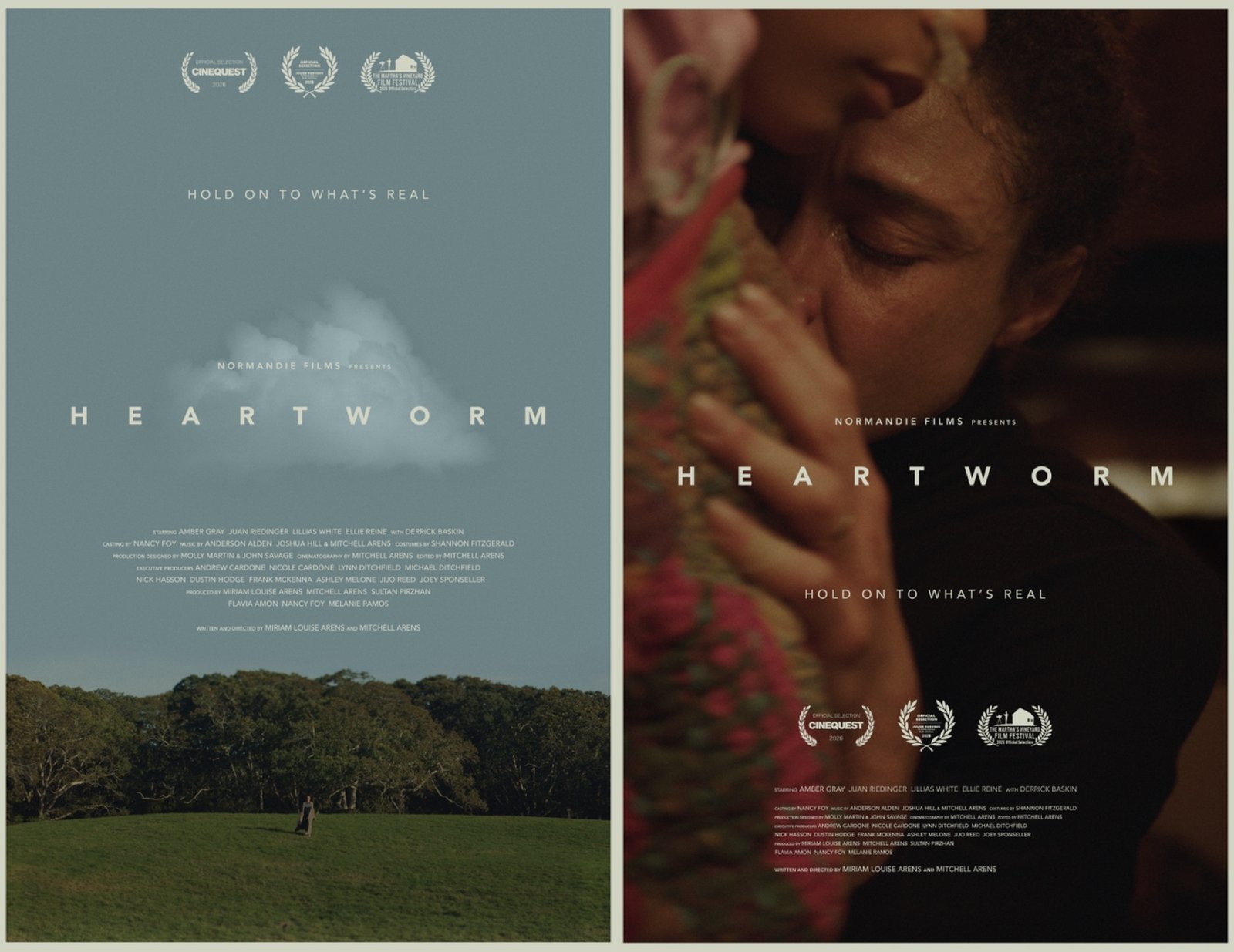
I was honored to get to screen Heartworm, the new AI tech thriller and exploration of grief and trauma, for its premiere at Cinequest – which I reviewed for Cinapse a few weeks ago. The movie hit me hard, so I decided to reach out to the filmmakers for a short chat.
The thoughtful responses from Miriam and Mitchell certainly didn’t disappoint. So, with that, I’d like to share our exchange… and encourage you to check out their site (normandiefilms.com) and the film’s site (heartwormthefilm.com) to find out more about where you can watch the film and more.
Let’s do the requisite opening questions… who am I talking to and how may people know of you?
Thanks for this Justin! You’re getting written responses from Miriam and Mitchell Arens, the co-directors of Heartworm, (no LLMs used). Not too many people know about us. Our kids do, our parents, friends and collaborators. As our film Heartworm continues to tour festivals, those audiences are getting to know us. We’ve had the privilege of showing the film at Cinequest, Martha’s Vineyard International Film Festival, and up next Julien Dubuque International Film Festival.
I want to dive right into your new film, Heartworm. As both the writing team and the directing team, you guys really are the braintrust of this one. Where did the idea come from? What inspired you to make the film?
Our inspiration came from two places. Firstly, as we were observing the world around us, we became aware of how much tech had been encroaching on people’s daily lives. It seemed to be changing the way people were interacting with one another, and morphing our sense of human to human connection. Around this time, we experienced a miscarriage, and in our grief, we suddenly found ourselves isolated from our community of friends and collaborators. We were in desperate need of human to human contact, but we found it difficult to come by. This is what really launched our idea for Heartworm. We began thinking about all the ways people are driven apart by technology, and exploring the idea of what might happen in a world where everyone is “tapped out” of Reality and living in a self-curated version of the world. How would people behave in that future? And as it relates to Avena and Mark, our main characters, how would a couple survive the unimaginable in a world where human to human connection was no longer the norm?
While you have a distinct sci-fi flavor with the type of story popularized in the modern day by things like Black Mirror, the film has a real depth to it. With dueling themes of AI (the primary technology in the film’s main vehicle) and grief, there are multiple layers of meaning with this film. Let’s start more on the surface with the themes surrounding AI. Without getting too in depth or spoiler-y, what do you think people may take away in regards to the modern and near-future uses of AI, like the product at the center of this story?
In the world of the film, NeuraLife, an immersive AI platform, has been adopted as the primary place of human interaction and experience. It offers an escape from reality and a cure-all for human ailments as far reaching as grief. Our hope is that the audience takes Heartworm as a cautionary tale. The film encourages the viewer to imagine a future in which technology is suddenly capable of replacing the core tenants of our human experience. A future that seems to be fast approaching.
Do you think that we, as regular ole humans, should fear AI completely, embrace it, or is there a balance we need to strike in regards to its uses, limits, and ethics?
When it comes to our relationship with AI, balance feels really important to us, as well as a healthy amount of fear. Personally speaking, we don’t fear an apocalyptic future in which AI tries to destroy us (although according to experts this will become totally plausible as AI is adopted at the military level). We’re more fearful of a dystopian future, like in Heartworm, in which our embrace of AI counteracts the things that make us human. We’re afraid of a future in which most people choose to have a relationship with a machine instead of another person. And further than that, we’re afraid that our window of choice may be closing as our species comes up against big tech’s insatiable thirst for profits. (It’s worth noting that when we choose to have a relationship with a Chatbot, we are actually choosing to have a relationship with a corporation.) Our far-reaching hope for the future is that people embrace tech that nurtures our humanness, rather than diminishes it. With Heartworm and beyond, we’re doing everything we can to ensure a future in which the tech industry creates tools that codify our human experience rather than maximize profits. Something we often think about is the fact that more than 12,000 generations of people came before us, endowing us with all the human abilities that we take for granted. It would be an absolute shame to suddenly turn away from that collective effort.
In your film, the AI is a complicated tool that has positive and negative effects. But, like we briefly highlighted earlier, the film’s deepest themes surround something that vastly predates AI – grief. What is it about grief and how we deal with grief that really drew you to writing a story about it?
As artists, we’ve been wresting with grief for some time now. Some of our earliest projects explored similar territory. Grief is one of the farthest reaching human emotions, and yet it affects us all differently. Grief can drive a wedge between people, and it has the power to bring us together. Heartworm imagines a world in which technology is stealing away the grief process by offering an escape from the unimaginable. The only catch is that this “fix” actually toxifies our ability to move on, heal, and in Avena and Mark’s case, stay together. The film drops the couple into this high stakes scenario and encourages the audience to root for their deeply human reunion.
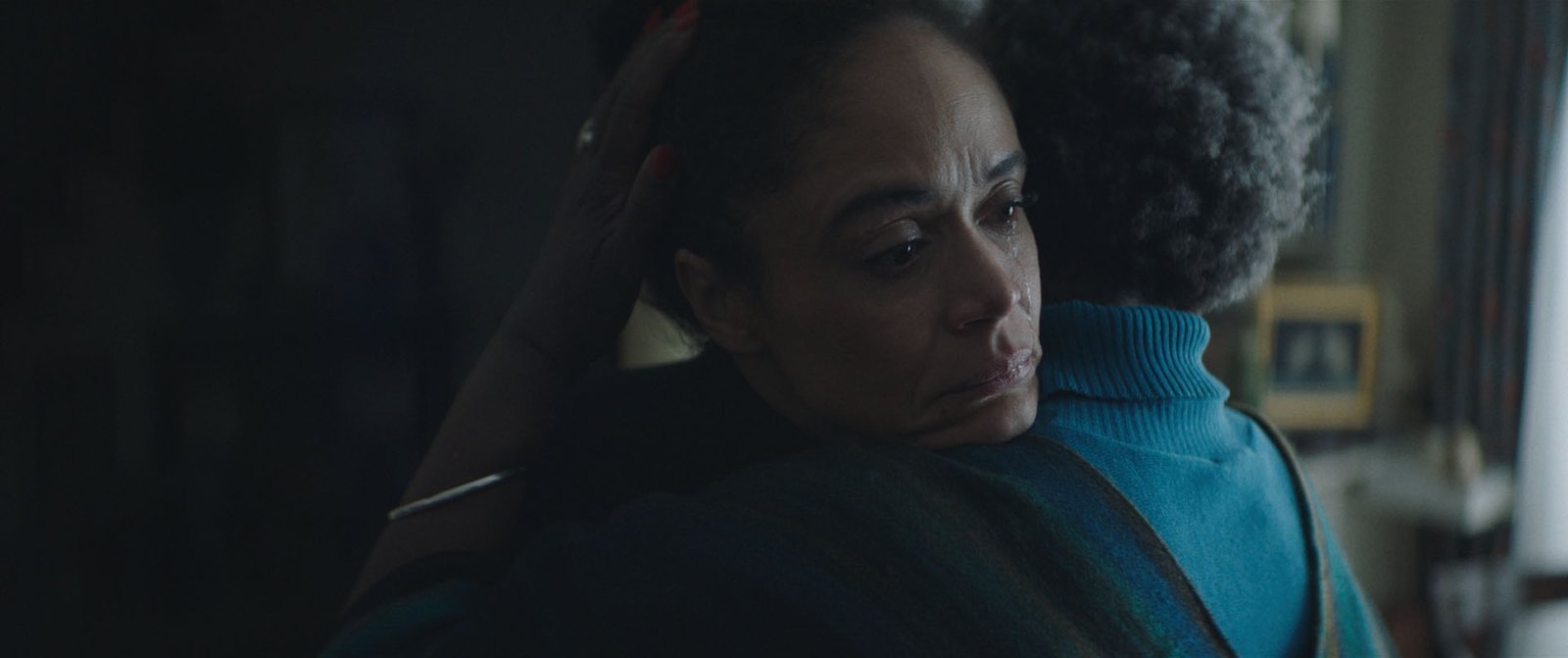
We obviously all grieve so differently, but there are also universalities as well. At least, it is fair to say that grief affects everyone and no one on the Earth has lived more than a few years without experiencing it in some form. Do you think that’s why so many technologies, books, classes, therapies, etc. are focused on dealing with grief? Do you think trying to “fix” grief is a futile task or is it something you think can be “fixed”? And, further, even if you believe it can be “fixed”, should it be?
Death remains the deepest of our human existential concerns, so it’s no surprise we continue to tell and retell stories about bereaved characters. Our belief is that grief is not something that can or should “fixed”, but is something that should to be felt, and beyond that, even embraced. We feel that grief is a door that we must walk through.
I’m a parent, myself. While I haven’t experienced the type of loss and grief our protagonists do, I can’t help but relate to every pain, every question, every difficulty that they express here. In a large sense, I found moments in this film utterly devastating. The specific ways in which the two main characters experience their grief is vastly different. What do you think the film is saying about this? Is one the better way? Are there equal dangers to both?
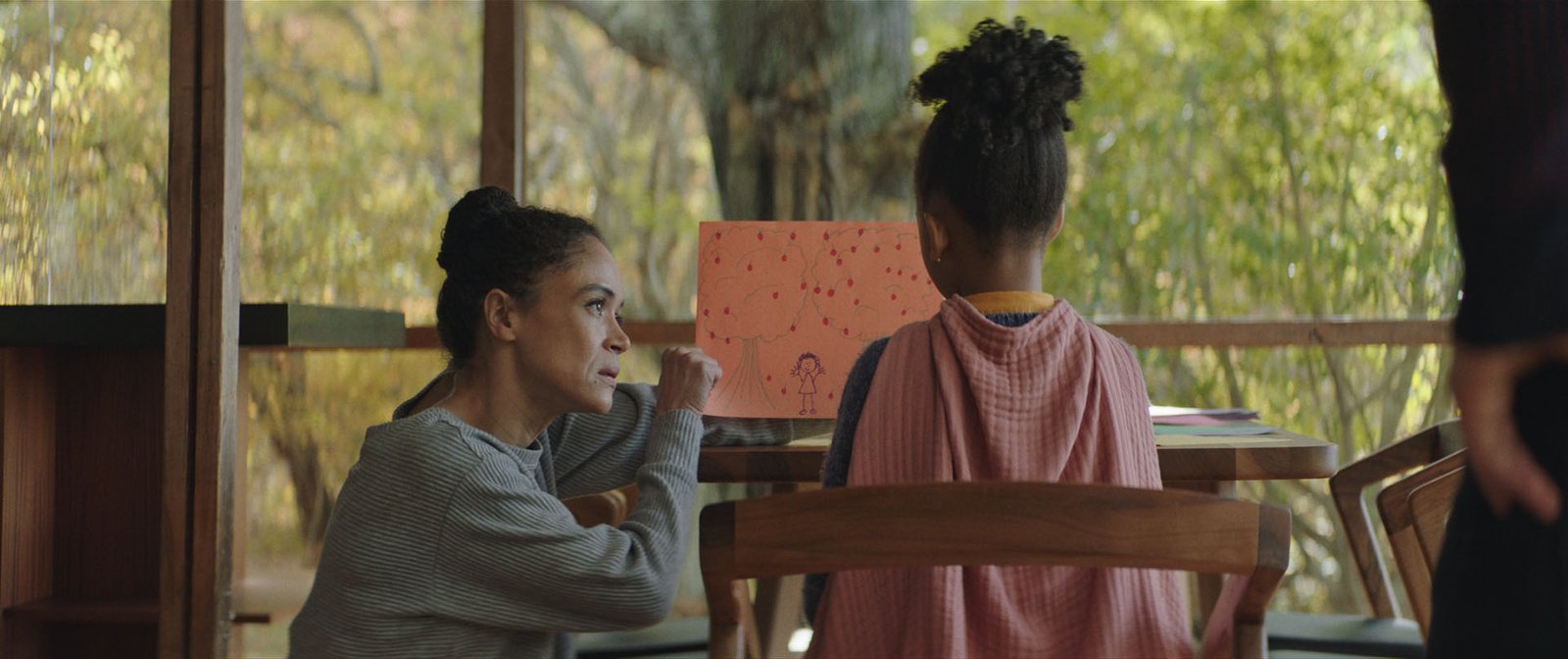
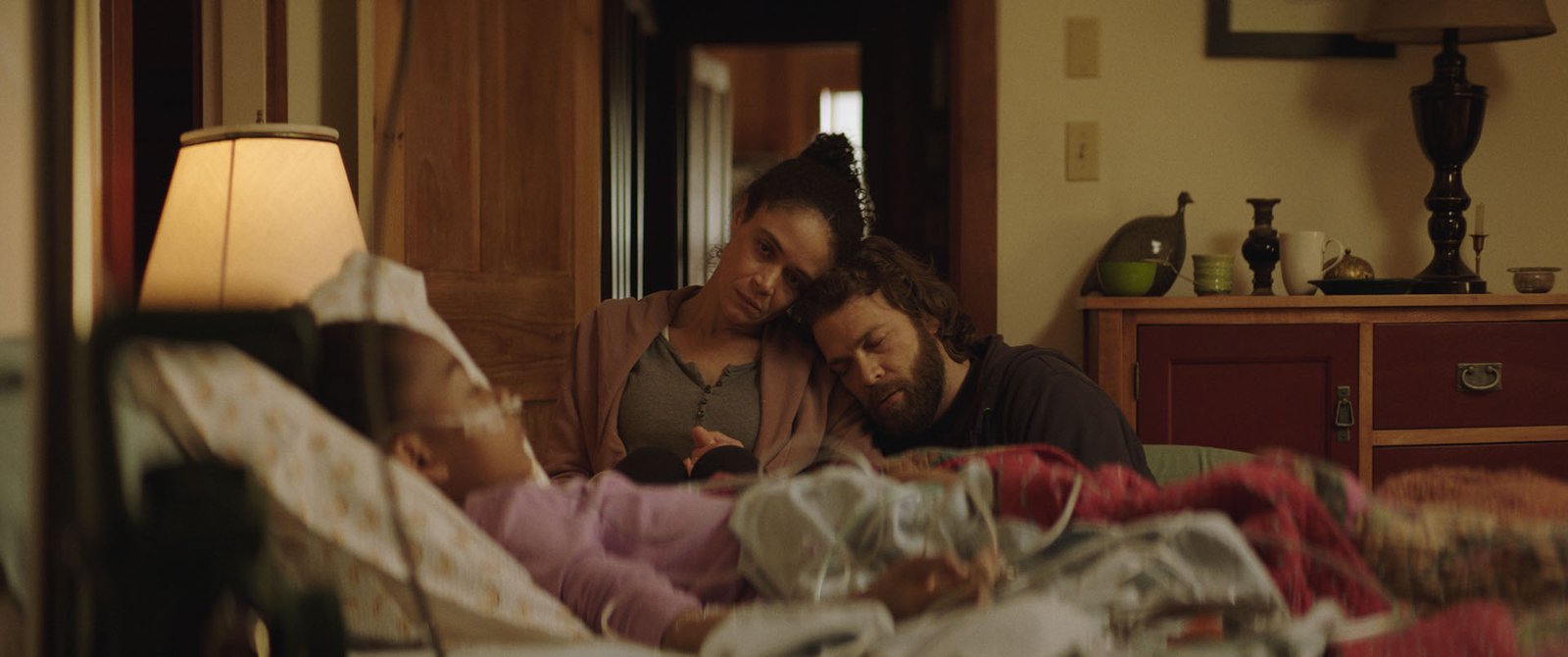
Over the course of the film, Avena begins to embrace the grief process. Step by step, she learns to see the world through her daughter’s eyes, which draws her closer to a state of acceptance. In contrast, Mark tends to tread in a state of denial, turning away from the grief process as he is pulled further and further into NeuraLife. The couple find themselves on conflicting and divergent paths, and there are hidden dangers in both. Even as she tries to save him, Avena risks alienating Mark by pushing him into emotional territory he’s not ready for. On the flip side, Mark’s attempt to stymie the grief process could cause him to lose everything. His adoption of an alternate reality in which Zamira never died risks trapping him in grief limbo forever. The film works hard to ground the audience in both perspectives to create a more complex and nuanced depiction of grief.
For me, there’s always a spiritual component to films and stories like this. Do you think your own personal faith or beliefs played into how this film unfolded? What do you think about the state of faith and spirituality in this current world we live in? How do we reconcile the modern world with spirituality and all the themes you are dealing with in this film?
Our personal beliefs didn’t influence our approach to the story, but the state of spirituality in our current world most certainly did. We want to be careful to make the distinction between spirituality and faith here. Heartworm engages with spirituality in the sense that there are forces beyond us that play a role in the film, and these forces are staged in direct conflict to the dominant technology the characters are immersed in. This conflict between spirituality and technology has been a defining one of our human race, and it has a huge presence in the film. With the rapid development of AI, we are approaching dangerous new territory in which technology is attempting to replace the things we used to look to spirituality for. We believe there is a healthy balance to all this, but we are fearful of a future void of spirituality. Our connection to forces beyond our control gives us strength and helps us understand things that science cannot. We believe spirituality helps us process grief in a way that technology never could.
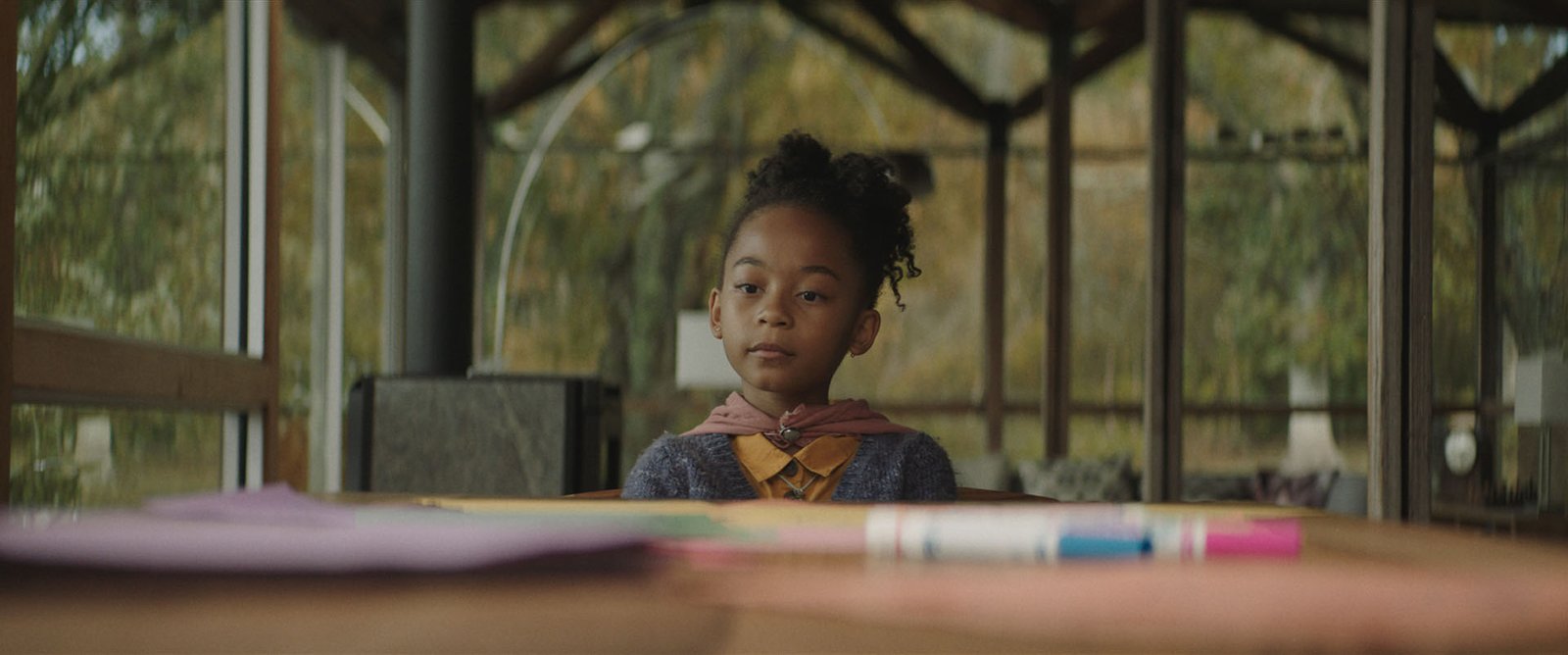
Sorry to get all philosophical, I just found this a deep movie in both thought and feelings for me. So much to think and to feel. I won’t soon forget it or stop thinking about it. But, for the sake of getting us on track with the interview overall, I want to talk about the film’s technical aspects – notably the cinematography and the performances. So, let’s start with the film’s look and feel. Who shot this film and what was your overall idea for how this film should look and feel? Do you think you achieved your goals in that respect?
We’re really happy with how the film’s technical qualities turned out. Mitchell is the cinematographer, co-writer and co-director, so the look of the film was being developed as far back as the scripting stage. Process is paramount for us, so our primary goal was to achieve an elevated look without sacrificing the actors’ needs. We wanted to leave ample time for everyone to make discoveries, and we tried to eliminate that ticking clock feeling that can be so pervasive on indie sets. This meant that we were lighting spaces versus individual setups and shots. We needed to make sure the camera could go wherever it needed to, whenever it needed to. Even under those limitations, we were still able to achieve the desired look and style, which uses contrast and shadow to communicate a sense of isolation and fragmentation. Heartworm takes place across multiple worlds and realms, so it was important that each space had a distinct look, feel and color identity.
And the other main aspect of the film itself I wanted to ask about was Amber Gray. How did she become part of this film? Her performance truly feels pitch perfect for the character.
Amber Gray is absolutely incredible. She is the soul and beating heart of Heartworm, and we feel so fortunate to have worked with her. Miriam and Amber actually attended Boston University together, so when we began casting Heartworm, her name came up right away as the potential lead. She’s a mother herself, and she brought so much complexity to the roll. The way she mixes strength with restrained vulnerability is pure magic. It’s worth mentioning that our wonderful casting director and co-producer, Nancy Foy, played a huge part in putting this amazing cast together. We’re so proud of the work everyone did, and the passion and imaginative powers they brought to set every day. The results speak for themselves, but this whole production was geared toward performance. We consider it our most potent special effect in our otherwise modest budget, so kudos to Juan Riedinger, Lillias White, Ellie Reine, Derrick Baskin, Audrey Moore, and everyone else who made these characters come alive.
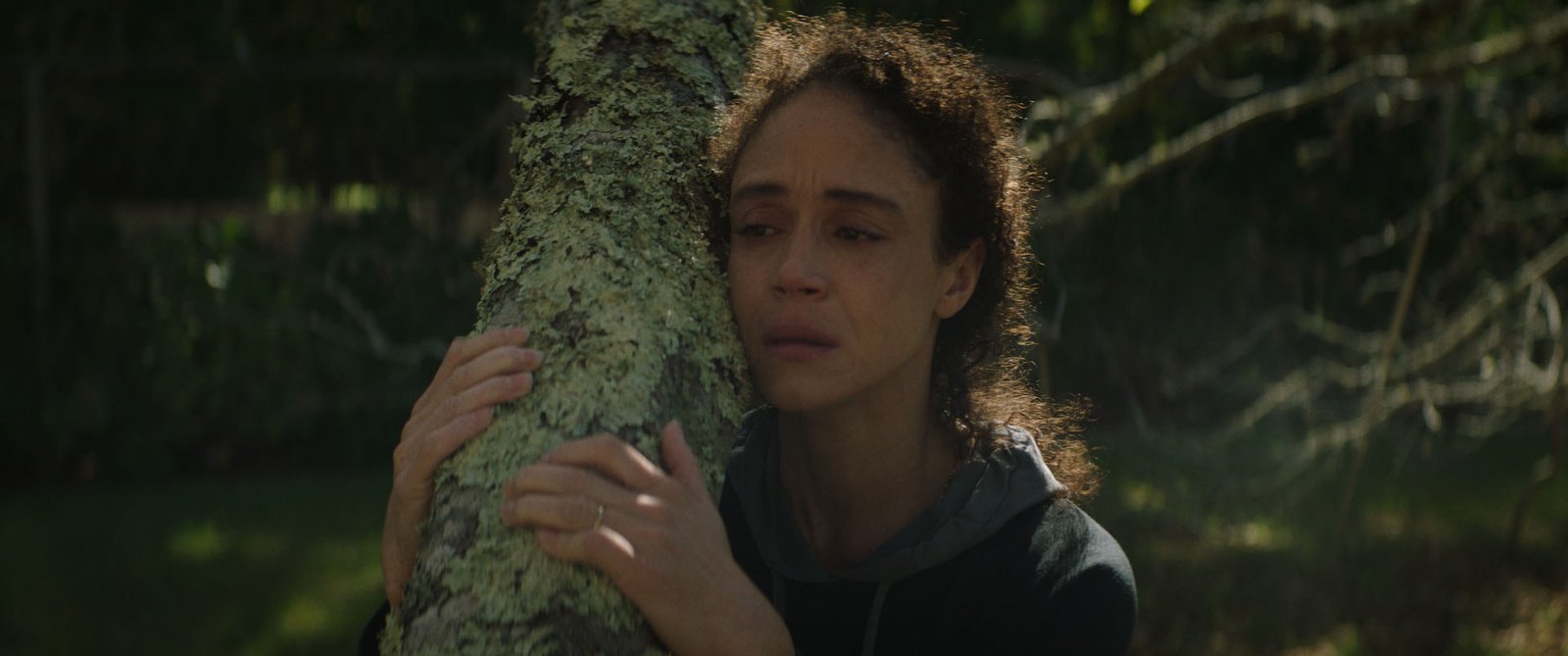
I really think her stage background shows in regards to just how well she emotes for the camera. Do you think that being a stage actor, in particular, helped prepare her for such an emotional role that requires a good amount of nonverbal storytelling?
Absolutely. There is an extreme physicality to the role and Amber’s ability to emote often left us in awe. Beyond that, Amber’s endurance was a huge benefit to the production. Her theater background in combination with her and Miriam’s shared language constantly took the performance into new territories. As a side note, it’s worth mentioning that Hollywood’s portrayal of grief is often centered around a strong fatherly figure, and the female lead is often sidelined, deactivated, and awash in grief. Heartworm flips that stereotype on its head, instead empowering the mother to drive the story forward. This intent was often revisited as a grounding force for Amber as she had to show up day after day and drop into Avena’s shoes. It goes without saying that this is a very challenging role, but she’s taken it and made it into something more, something iconic.
As you can tell, I genuinely loved this movie and I hope we can talk more about it in a longer form video or podcast discussion down the road – as I think there’s so much to wrestle with here. I’m so happy this film hit my radar and I was lucky enough to screen it as part of Cinequest’s coverage. For those who didn’t get to see it on it’s premier, what’s the plan for rolling out this film and how can the readers find it for themselves?
Thanks again so much for this opportunity Justin! The film’s next stop is the prestigious Julien Dubuque International Film Festival in Iowa. We’re screening at April 22, 2026 at 8:00 PM at the Phoenix Theatres Auditorium 2 and April 23, 2026 at 2:15 PM at the Grand Opera House. After that you can catch us at more festivals through the end of 2026. Check out heartwormthefilm.com for updates, press, and screening times.
Unlike the taboos of the world, 13 is actually kind of my lucky number, so I’m going to wrap this up with my 13th – and final – question. Can you leave us with a one to two sentence final statement that people can take with them both from your film and from you, here, as artists?
Heartworm is really driving at the fundamental question of what it means to be human in the modern age. As artists, we want to prop up what’s so unique about humanity and inspire the audience to see and value those strengths. Avena goes on this herculean journey through grief, going toe to with big tech, and it’s important for us to see ourselves in her, and to reconnect with that inner strength of our own human spirit, knowing that no machine, however sophisticated, could ever replicate it.
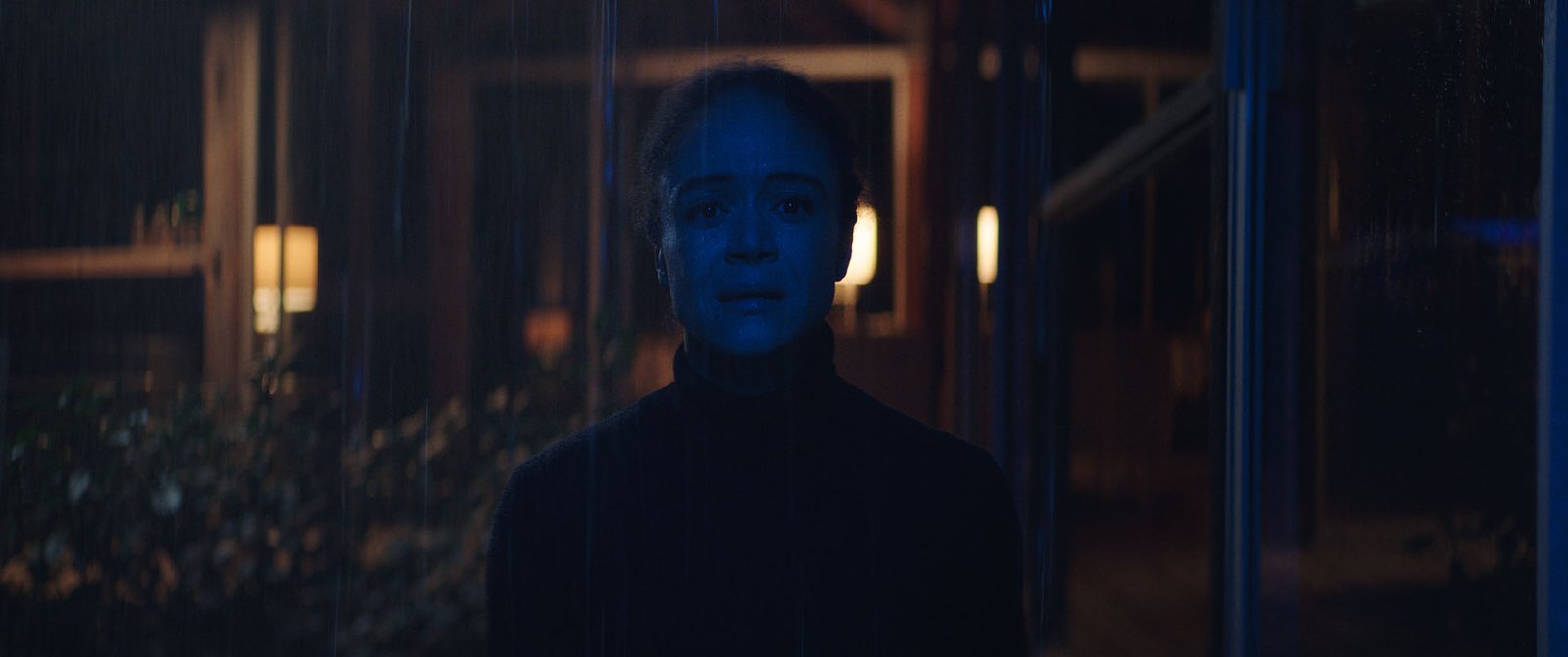
Heartworm is making the festival rounds, so keep your eyes out. Fans of Black Mirror and similar sci-fi cautionary tales about the near future will love this one. Just don’t go in expecting a light popcorn flick – lots of depth and some truly heavy themes here. Well worth your time.